The Logo Design Process Cheat Sheet
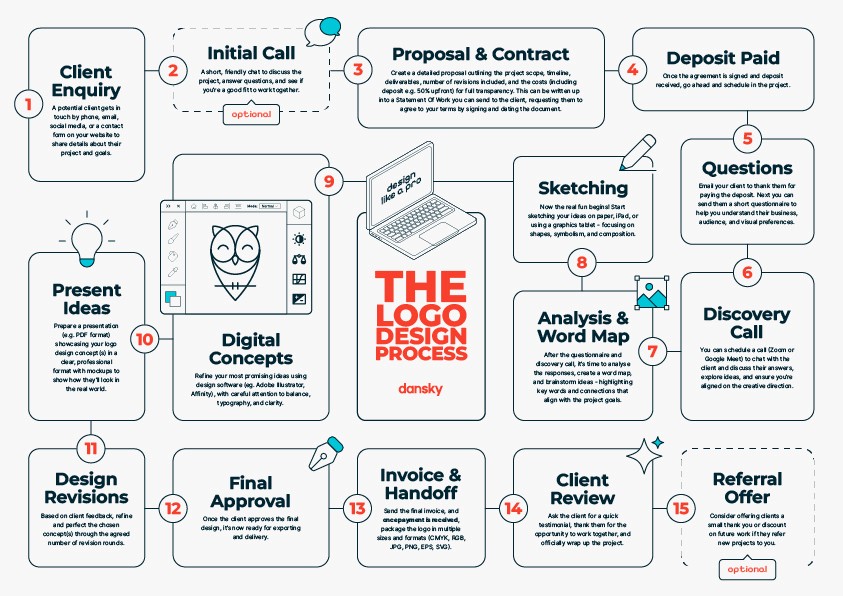
Download this free guide to see the full professional logo design process - from enquiry and research to sketching, digital concepts, revisions, and final delivery. It’s a clear step-by-step overview that shows exactly how a logo is created and what to expect when working with a logo designer.
1. Client Enquiry
A new client reaches out through email, social media, or your website to enquire about a logo design project. This first step helps establish basic details such as their industry, goals, and timeline. It sets the foundation for understanding whether the project is the right fit.
2. Initial Call (optional)
You may schedule a short introductory call to get a feel for the client and their expectations. This call helps build rapport and lets you clarify high-level information before sending a proposal. It also gives the client confidence that they’re speaking with a professional logo designer.
3. Proposal & Contract
You prepare a detailed proposal outlining project scope, pricing, deliverables, and deadlines. Once the client agrees, both parties sign a formal contract to lock in the agreement. This protects the designer and ensures clear expectations from the start.
4. Deposit Paid
The client pays the initial deposit to secure their spot (typically 30-50% of the total project cost). This confirms their commitment and allows you to schedule the project in your calendar. Only after payment is received does the design work officially begin.
5. Questions
You send a structured logo design questionnaire to gather essential details about the brand. This includes their audience, competitors, values, personality, and visual preferences. Strong answers here save time later and ensure you start with a clear creative direction.
6. Discovery Call
A deeper discovery call allows you to unpack the questionnaire in more detail and ask follow-up questions. This is where you clarify the brand's message and make sure both sides are aligned before sketching begins. It helps eliminate guesswork and leads to stronger, more relevant concepts.
7. Analysis & Word Map
You analyse all the collected information and break it into keywords, themes, and visual ideas. Creating a word map helps identify patterns and potential directions for the logo. This step strengthens the strategic foundation behind the design.
8. Sketching
You start sketching a wide range of logo ideas, focusing on shapes, marks, and symbolic interpretations of the brand. This stage is flexible and experimental, allowing you to explore creative territory before committing to a final direction. The strongest sketches will move forward into digital refinement.
9. Digital Concepts
Your best sketches are recreated and refined in professional design software, such as Adobe Illustrator or Affinity Designer. At this stage, you perfect shapes, spacing, alignment, and typography for clean, scalable results. These digital concepts become polished options ready for client review.
10. Present Ideas
You prepare a professional presentation (pdf format) showing each logo concept in clear layouts and real-world mock-ups. This helps the client visualise how their brand could appear across different applications. A strong presentation makes decision-making easier and shows your work in the best possible light.
11. Design Revisions
Based on client feedback, you refine the selected concept to further improve clarity, style, and brand alignment. Revisions usually include small adjustments to shape, spacing, and type. This stage ensures the final logo feels perfectly tailored to the client’s needs.
12. Final Approval
Once the client is fully satisfied, they give final approval on the chosen design. This confirms that all revisions are complete and the logo is ready for export. It’s the last creative step before delivering the final files.
13. Invoice & Handoff
You send the final invoice, and once paid, deliver all logo files in the correct formats: vector, print, and web. These typically include AI, EPS, PDF, SVG, PNG, and JPG. You may also include a mini style guide to help the client use their new logo correctly.
14. Client Review
After delivery, you invite the client to leave a short review or testimonial about their experience. These reviews build social proof and help attract future clients. It’s also a great way to establish long-term professional relationships.
15. Referral Offer
You can offer existing clients a referral incentive or discount for recommending your services. This encourages word-of-mouth marketing and helps grow your design business organically. It’s a simple but effective way to keep new projects coming in.